Beyond ABCs and Activities: The Changing Role of Early Childhood Educators
17th June 2026
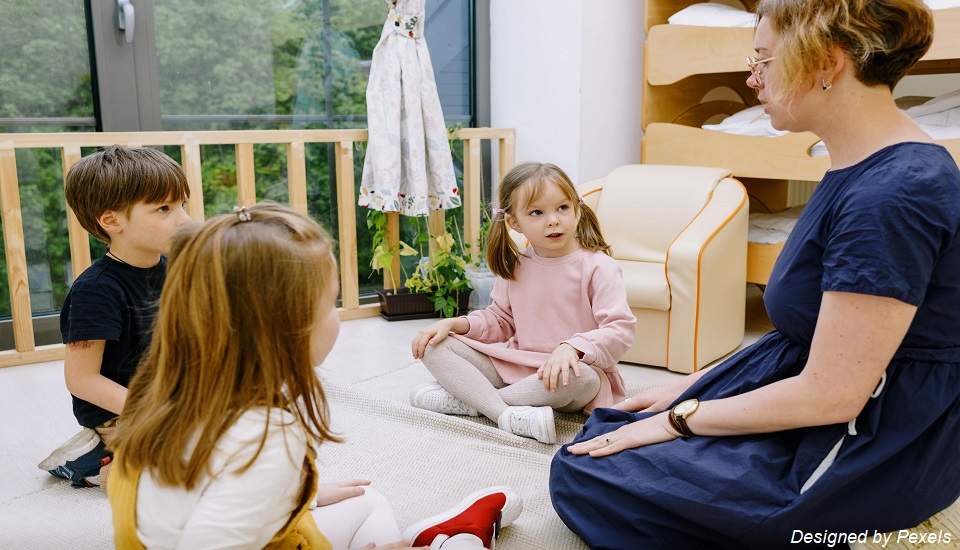
Walk into a preschool classroom today, and you will see something quite different from what existed a decade ago.
Yes, there are still finger paintings on the walls and story corners with colourful books. But look a little closer at what the teacher is actually doing.
They are-
- Not just reading aloud or leading a song.
- Tracking a child who has been unusually withdrawn.
- Adapting an activity in real time for a child who processes instructions differently.
- Quietly documenting a pattern she noticed three sessions ago.
Early childhood education has quietly become one of the most complex, demanding, and consequential roles in all of education.
So why are we still treating it like it only requires basic training?
For educators who want to meet the real demands of today's classrooms, postgraduate pathways like an early childhood education masters programs are no longer optional career extras. They are becoming essential professional tools.
What Early Childhood Educators Are Actually Expected to Do Now
The job description has changed dramatically, and most people outside the classroom have not caught up.
Today's early years educator is expected to:
- Identify early markers of developmental delays before formal diagnosis
- Support children with autism, ADHD, sensory processing differences, and speech delays within the same classroom
- Build genuinely inclusive environments that do not just accommodate diverse learners but actively serve them
- Communicate complex observations to parents, specialists, and school leadership
- Navigate safeguarding responsibilities with increasing legal and ethical weight
- Differentiate learning experiences across a wide range of developmental stages simultaneously
This is not the role most educators signed up for ten or fifteen years ago. And it is certainly not a role that a basic certificate fully prepares anyone for anymore.
Why SEN Is Now Central to Early Childhood Teaching
Special Educational Needs (SEN) used to be considered a specialist lane, separate from mainstream early childhood education. That separation no longer reflects reality.
Current global data tells a clear story:
- Approximately 1 in 6 children worldwide has a developmental disability of some kind
- Autism diagnoses have risen sharply across every region in the last two decades
- Most children with SEN spend their early years in mainstream settings, not specialist schools
- Early identification and intervention in the preschool years produce significantly better long-term outcomes
The implication for early years teachers is direct: You do not need to work in a specialist SEN setting to need SEN training. The children are already in your classroom.
An advanced degree for SEN teachers that also covers early childhood development gives educators a framework for understanding what they are seeing, responding to it appropriately, and building environments that genuinely work for every child in the room.
The Shift Toward Inclusive Classrooms in Early Years Settings
Inclusive education for teachers is no longer a philosophical position. It is a professional expectation.
Globally, education policy is moving firmly in the direction of inclusion. The United Nations Convention on the Rights of Persons with Disabilities has reinforced this direction at an international level. Many countries have strengthened legislation requiring schools to accommodate diverse learners within mainstream environments.
For early years educators, this means the classroom itself needs to change. And that requires more than good intentions.
Building truly inclusive classrooms for neurodiverse learners involves:
- Designing physical spaces that reduce sensory overwhelm
- Creating flexible routines that work for children with different regulatory needs
- Using visual supports, communication aids, and adaptive materials as standard practice
- Assessing children's progress in ways that reflect individual growth rather than group benchmarks
- Collaborating with occupational therapists, speech therapists, and educational psychologists
None of this is intuitive. It requires knowledge, practice, and structured learning that goes well beyond foundational teacher training.
Why a Postgraduate Degree Changes How You See the Classroom
There is a particular shift that happens when educators pursue postgraduate study in early childhood education.
It is not just the addition of new information. It is a change in how they observe, interpret, and respond to what is happening in front of them.
A postgraduate degree in early childhood education with a strong SEN component gives educators:
- Theoretical grounding in child development models, neuroscience, and learning theory
- Research literacy so they can evaluate new approaches critically rather than just adopting trends
- Practical frameworks for assessing children with diverse needs accurately and ethically
- Leadership capability to influence school policy, mentor junior colleagues, and shape curriculum decisions
- Professional credibility that opens doors to advisory, specialist, and senior roles
The classroom experience that most early years teachers already have is genuinely valuable. Postgraduate study does not replace it. It gives that experience a structure and a language that multiplies its impact.
What Inclusive Teaching Strategies Actually Look Like in Practice
One of the most common gaps in early childhood teacher training is the jump between understanding inclusion in theory and implementing it in a real, messy, busy classroom.
Postgraduate programs that integrate inclusive teaching strategies into their curriculum bridge this gap directly. Educators learn to apply approaches that work in practice, not just in ideal scenarios.
Some of the most effective inclusive strategies in early years settings include:
- Universal Design for Learning (UDL): Designing lessons from the start to be accessible to all learners, rather than retrofitting adjustments for specific children
- Structured Sensory Play: Incorporating sensory activities that support regulation and learning for children with sensory processing differences
- Visual Timetables and Routine Anchors: Providing predictability that supports children with anxiety, autism, or executive function challenges
- Collaborative Goal Setting: Working with families and specialists to set meaningful, achievable targets for each child
- Strength-Based Assessment: Documenting what children can do rather than building profiles around deficits
These are not specialist tools reserved for SEN classrooms. They are an effective practice for every child in every early years setting.
Special Education Knowledge Is Reshaping the Preschool Years
There was a time when special education for preschool teachers was considered niche knowledge, something only a small group of educators needed. That view has become increasingly difficult to justify.
Preschool is now understood to be one of the highest-leverage intervention windows in a child's entire education. Research consistently shows that children who receive appropriately differentiated support during the three-to-five age range demonstrate significantly stronger outcomes in language, social development, and academic readiness by the time they reach primary school.
This means the preschool teacher who can identify and respond to a child's additional needs early is not just doing good work. She is potentially changing the entire arc of that child's educational journey.
That kind of impact requires knowledge. Knowledge requires training.
The Bottom Line
The early childhood educator of today is not the same role it was twenty years ago. The children in those classrooms are more diverse, the expectations are higher, and the window of opportunity to make a real difference is shorter and more significant than it has ever been.
Meeting those demands requires more than experience and dedication. It requires structured, expert-level knowledge of child development, SEN, and inclusive pedagogy.
For educators ready to step into that responsibility fully, exploring an MA in Education with Early Childhood Education and SEN is one of the most meaningful professional investments available today.
The children in tomorrow's classrooms will be shaped by the training their teachers pursue today.
Frequently Asked Questions (FAQs)
1. Why has the role of early childhood educators changed?
The role has changed because early years educators are now expected to support diverse learning needs, identify developmental concerns early, adapt activities, communicate with families, and create inclusive classrooms for all children.
2. What is an MA in Education with Early Childhood Education and SEN?
An MA in Education with Early Childhood Education and SEN is a postgraduate qualification that helps educators develop advanced knowledge of child development, special educational needs, inclusive teaching, and early years classroom practice.
3. Who should pursue early childhood education master's programs?
Early childhood education master's programs are suitable for preschool teachers, nursery educators, early years coordinators, SEN teachers, childcare professionals, and educators who want to move into specialist or leadership roles.
4. How does SEN training help early childhood educators?
SEN training helps early childhood educators identify learning differences early, adapt teaching strategies, support neurodiverse learners, and work more effectively with parents, therapists, and school leaders.
5. Why is special education important for preschool teachers?
Special education for preschool teachers is important because many developmental and learning needs first appear during the early years. Teachers with SEN knowledge can provide timely support that improves long-term learning outcomes.
6. What are inclusive teaching strategies in early childhood education?
Inclusive teaching strategies include using visual supports, flexible routines, sensory-friendly spaces, differentiated activities, strength-based assessment, and learning approaches that support children with different developmental needs.
7. Can a postgraduate degree in early childhood education support career growth?
Yes. A postgraduate degree in early childhood education can support career growth by strengthening professional credibility, opening pathways into SEN support, curriculum leadership, early years coordination, and advisory roles.
8. Why are inclusive classrooms important for neurodiverse learners?
Inclusive classrooms for neurodiverse learners create safer, more flexible, and more supportive environments where children with autism, ADHD, sensory differences, or developmental delays can participate meaningfully and grow with confidence.
Written By: Sheetal Sharma