Preparing Children for Jobs That Don't Exist Yet Starts in Early Childhood
6th July 2026
Here is a number worth sitting with.
According to the World Economic Forum, 65% of children entering primary school today will eventually work in jobs that do not exist yet.
Not some children. Most children.
That means the education systems shaping young learners right now are preparing them for a future that no one can fully predict. No job description. No career pathway. No roadmap.
So what do you actually teach a child when you do not know what they will need to know?
The answer, increasingly supported by developmental research, is that you focus less on what children learn and more on how they learn to think, adapt, collaborate, and solve problems. And that work does not begin in secondary school or even primary school. It begins in the earliest years of a child's life.
This is why the quality of early childhood education has never mattered more, and why professionals entering this field through structured pathways like a B.Ed. in Early Childhood Education are being recognised as some of the most forward-looking educators in the profession today.
Why the Early Years Are the Most Powerful Window for Future-Ready Learning
Brain development research has been making the same point for decades, and it keeps getting louder.
By the age of five, approximately 90% of a child's brain architecture is already formed. The neural pathways built during these early years become the foundation for everything that follows: how a child learns, how they regulate emotions, how they handle uncertainty, and how they relate to others.
This is not abstract science. It has direct implications for what early childhood educators do every day.
The skills most likely to matter in unpredictable future workplaces are:
- Critical Thinking and Problem-Solving: The ability to analyse situations and find solutions without being handed a formula
- Creativity and Adaptability: The capacity to approach unfamiliar challenges with curiosity rather than anxiety
- Emotional Intelligence: Understanding one's own responses and reading others accurately, a skill no automation can replicate
- Communication and Collaboration: Working effectively with people across different contexts and perspectives
- Resilience: The ability to recover from failure, try again, and keep learning
Every single one of these skills has its roots in early childhood. And every one of them can be nurtured or neglected depending on the quality of the learning environment a child experiences between birth and age eight.
What Future-Ready Early Childhood Education Actually Looks Like
There is a common misconception worth addressing directly.
Preparing children for a complex future does not mean introducing academic pressure earlier. It does not mean more worksheets, earlier literacy drilling, or structured testing for three-year-olds. The research points in the opposite direction entirely.
Future-ready early childhood education looks like:
- Play-based learning environments where children make choices, test ideas, and experience natural consequences
- Open-ended problems with no single correct answer, encouraging children to think rather than recall
- Collaborative activities that require children to listen, negotiate, share, and build on each other's ideas
- Storytelling and creative expression that develop language, imagination, and the ability to construct meaning
- Physical and sensory exploration that builds spatial reasoning, coordination, and an early relationship with experimentation
- Emotionally responsive relationships with educators who model regulation, empathy, and thoughtful communication
None of this is accidental. In high-quality early childhood settings, every activity is intentional. Every interaction is purposeful. And behind all of it is an educator who understands child development deeply enough to know what each moment is actually building.
That level of intentionality requires training. It requires knowledge of developmental psychology, curriculum design, observation methods, and inclusive practice. It is not something that happens naturally from enthusiasm alone.
The Role of Qualified Early Childhood Educators in Shaping Long-Term Outcomes
Ask most people what early childhood educators do, and they will describe someone who plays with children, reads stories, and keeps small people safe.
That is not wrong. But it is profoundly incomplete.
A qualified early childhood educator is doing something far more complex:
- Observing individual children to understand their developmental stage and learning style
- Designing environments and experiences that stretch each child appropriately
- Identifying early signs of developmental delay, emotional difficulty, or learning difference
- Supporting language acquisition and communication development during the critical window
- Building relationships with families that extend learning beyond the classroom
- Navigating inclusion, cultural diversity, and differentiated needs within a single group of learners
The impact of a skilled early childhood educator on a child's trajectory is well documented. Longitudinal studies across multiple countries have consistently shown that high-quality early years education improves outcomes not just in early schooling but across a child's entire educational journey and into adult life.
Those outcomes are directly tied to educator quality. And educator quality is directly tied to the depth of professional training educators receive.
Why Early Childhood Development Knowledge Is Becoming a Global Priority
Governments and education systems worldwide are waking up to what developmental researchers have known for years: investment in early childhood education produces returns that no other stage of education can match.
Countries across Southeast Asia, the Middle East, Europe, and Africa are:
- Expanding access to regulated early childhood programs
- Raising minimum qualification requirements for early years educators
- Integrating social-emotional learning frameworks into national early years curricula
- Investing in training pipelines to address shortages of qualified early childhood professionals
This is creating a significant and growing demand for educators with formal qualifications in early childhood development, particularly those who combine theoretical knowledge with practical classroom competency.
For individuals already working in early years settings or those considering entering the field, this shift represents a genuine professional opportunity. Enrolling in early childhood education courses that build both developmental theory and applied practice has become one of the most career-relevant decisions a professional in this space can make.
How Educator Training Shapes the Environments Children Grow Up In
Here is something worth thinking about carefully.
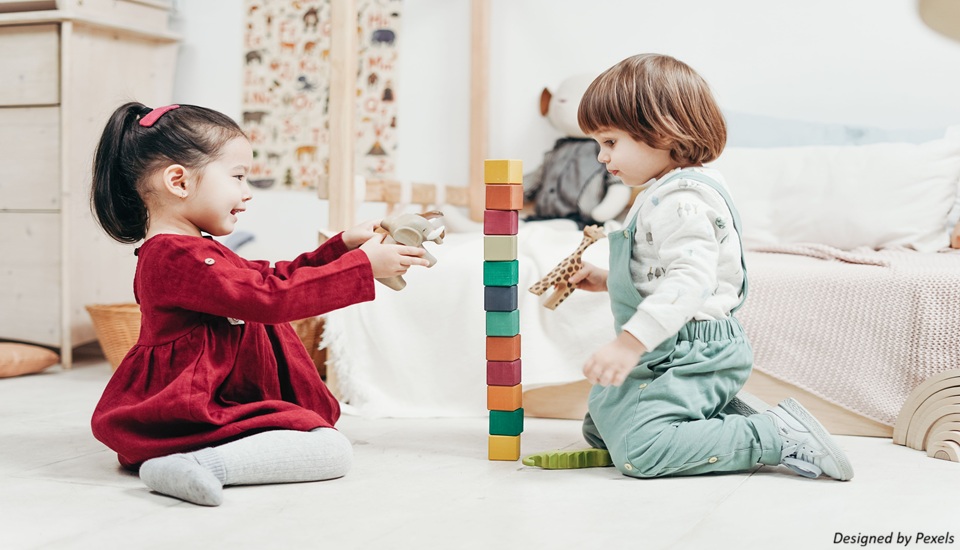
Children do not experience curriculum. They experience environments, relationships, and moments. What feels like a simple afternoon of building blocks or dramatic play is, in a well-designed early childhood setting, a carefully structured opportunity for cognitive, social, and emotional development.
The difference between a mediocre early childhood environment and an exceptional one is almost always the educator.
Specifically, what separates high-impact early years practice includes:
- Understanding how to scaffold learning without removing the challenge that makes growth possible
- Knowing when to intervene and when to step back and let a child work through difficulty
- Recognising the developmental significance of behaviour that might otherwise look like disruption
- Creating inclusive environments where children with different abilities and backgrounds all feel genuinely capable
- Connecting daily experiences to developmental milestones in ways that inform planning and communication with families
Professionals who pursue a formal early childhood development degree bring this level of knowledge into their practice. It changes not just what they do in a classroom, but how they think about every interaction with a young learner.
The Bottom Line
The future is genuinely unpredictable. The jobs children will hold, the problems they will solve, and the tools they will use have not been invented yet.
But the skills that will make them capable of navigating that future are being shaped right now, in nurseries, preschools, and early learning centres around the world. And the educators guiding that process need to be equipped with far more than enthusiasm.
For professionals who want to be part of building that foundation and who want the knowledge to do it well, pursuing a Bachelor of Early Childhood Education online is one of the most meaningful professional investments available in education today.
The future starts earlier than most people think. So does the preparation for it.
Frequently Asked Questions (FAQs)
Q1. What age range does early childhood education cover?
Early childhood education generally covers children from birth to eight years, focusing on the most critical developmental years.
Q2. Why is early childhood education important for future skills?
Cognitive, social, and emotional skills formed in the first eight years are foundational for critical thinking, adaptability, and collaboration in later life.
Q3. What does a B.Ed. in Early Childhood Education teach?
The program covers child development, curriculum planning, inclusive education, play-based learning, classroom management, and family engagement strategies.
Q4. Can I pursue a B.Ed. in Early Childhood Education online?
Yes. Accredited online programs allow educators to gain theoretical knowledge and practical insights while continuing to work.
Q5. How does this degree prepare teachers for modern classrooms?
Graduates learn to create intentional, research-backed learning environments that foster independence, creativity, and social-emotional growth.
Written By: Sanjana Chowdhury